

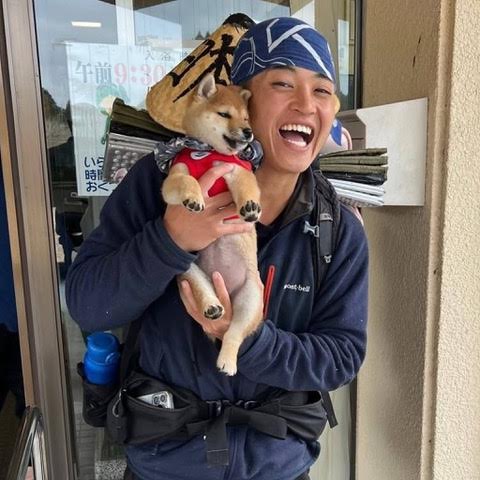
The crypto world is full of innovation, but few projects have cracked one of its biggest challenges: accessibility. While developers race to optimize blockchains and enhance scalability, most projects still fail to bring in the average user. For the creators behind $SAN, the meme coin inspired by a walking Shiba Inu named San Chan, the breakthrough wasn’t just technical — it was emotional. It was about connection, simplicity, and purpose.
At the heart of this story is Kantaro Inagaki, a Japanese influencer who gained a massive following by sharing his daily walks with his Shiba Inu puppy, San Chan. With over a million fans across social platforms, Kantaro found himself facing a classic Web3 problem: how do you bring regular people into crypto without confusing or alienating them?
“If you have a few million TikTok and Instagram followers, then you want to find a way for them to join the crypto community without having to onboard them to Solana,” he explains.

Instead of forcing followers to download wallets or learn blockchain lingo, Kantaro and the $SAN team took a different path — one that meets people where they already are. They pioneered a Shopify-to-Solana integration, making $SAN the first meme coin project to enable seamless Web2-to-Web3 commerce through a merch store. It’s a straightforward process: fans buy a hoodie, cap, or T-shirt just like they would from any online store. But behind the scenes, their purchase directly supports the $SAN ecosystem.
“Now anyone can support us by just buying merchandise, and the technology does the rest in the background for you,” says Kantaro.
The innovation didn’t stop at simplicity. The merch store operates under a “buy-and-burn” model, meaning every dollar of profit is used to purchase $SAN tokens, which are then permanently removed from circulation. The aim? To reduce supply, increase scarcity, and support the token’s long-term value.
“The merch is a pure non-profit initiative as no one wants to make money from fans,” he says. “Our Shopify to Solana technology automatically buys and burns $SAN tokens with profits from every sale.”

This deflationary mechanism also powers a larger mission. Since fewer tokens in circulation can translate to a stronger token economy, this setup directly benefits $SAN’s 10-year charity roadmap. “The way this is done means those tokens can never be sold again and has a positive impact on the overall value,” Kantaro explains, “which means our charity donation can grow over time.”
In a space often dominated by hype and speculation, the San Chan project stands out for actually delivering infrastructure — and doing so with an irresistibly cute mascot. The team isn’t just making crypto more accessible; they’re also making it more human. By combining useful tech with a heartfelt story, they’ve found a formula that resonates with audiences far beyond the typical Web3 crowd.
And they aren’t done yet. The next move is to share this technology with others. “We are in fact planning to open up the technology to other Solana meme coins so that they can use it as well. It was a natural next step and we have partnership requests already.”
If $SAN succeeds in making crypto adoption easier for mainstream users—and helps other projects do the same — it could mark a shift in how meme coins are perceived and used. This isn’t just about another token. It’s about building bridges between digital economies and everyday lives.
By attaching the crypto experience to something as relatable and joyful as a dog’s journey through Japan, Kantaro and his team may have found a way to turn casual followers into active participants — one sweatshirt at a time.
Download the app and explore the future of fandom on iOS or Android.
